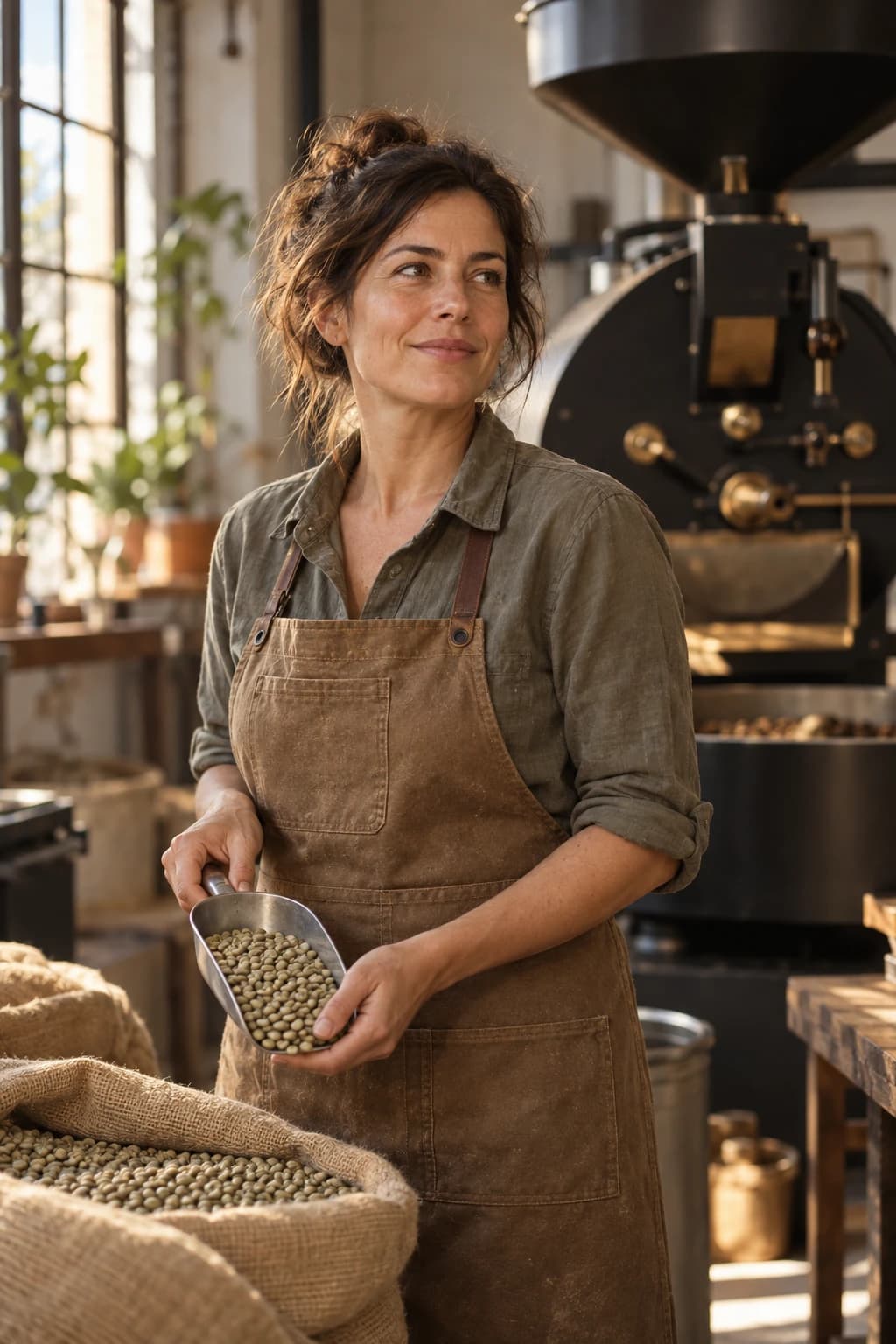
“I bought a second-hand drum in 2016 with nowhere to put it. Ten years on we roast 480 kilos a week, and I still know the name of every farmer whose coffee goes into it.”
Nadia FerrerFounder & head roaster
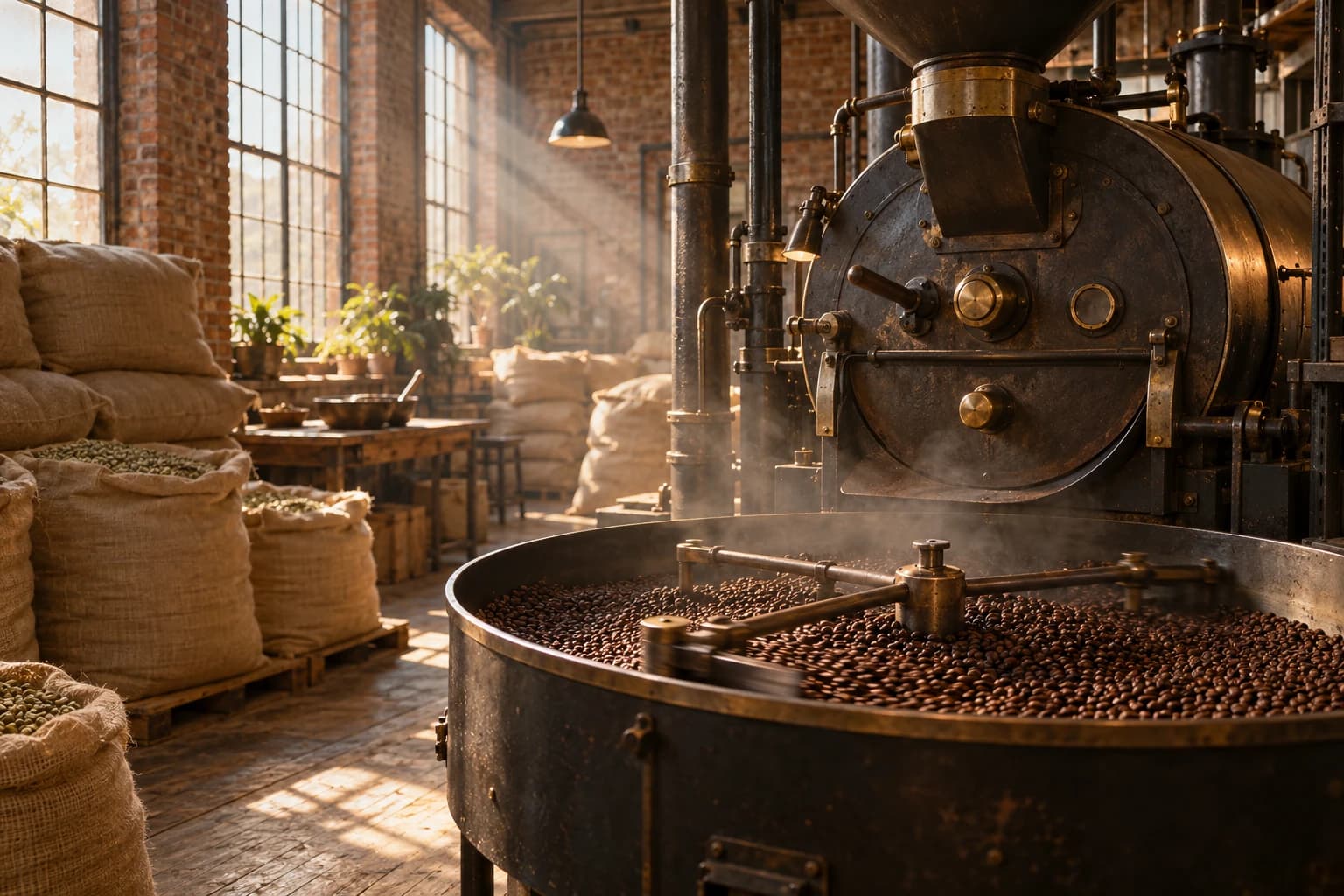
The drum15 kg, cast iron, built in 1958
Roasting since
2016
Partner farms
12
In the drum per batch
15 kg
Roasted every week
480 kg
Nadia FerrerFounder & head roaster
(01)The founder
She bought the drumbefore the building.
In 2016 Nadia Ferrer had spent eleven years pulling shots and cupping samples for other people's roasteries. When a fifteen-kilo drum roaster came up for sale two valleys over, cast iron and older than she was, she bought it before she had anywhere to put it.
The town's seed warehouse on Mill Race Road had stood empty since the co-op moved out. Brick walls from the 1920s, tall north windows, and a loading door wide enough for a pallet of green coffee. The roaster went in through that door and still stands beside it.
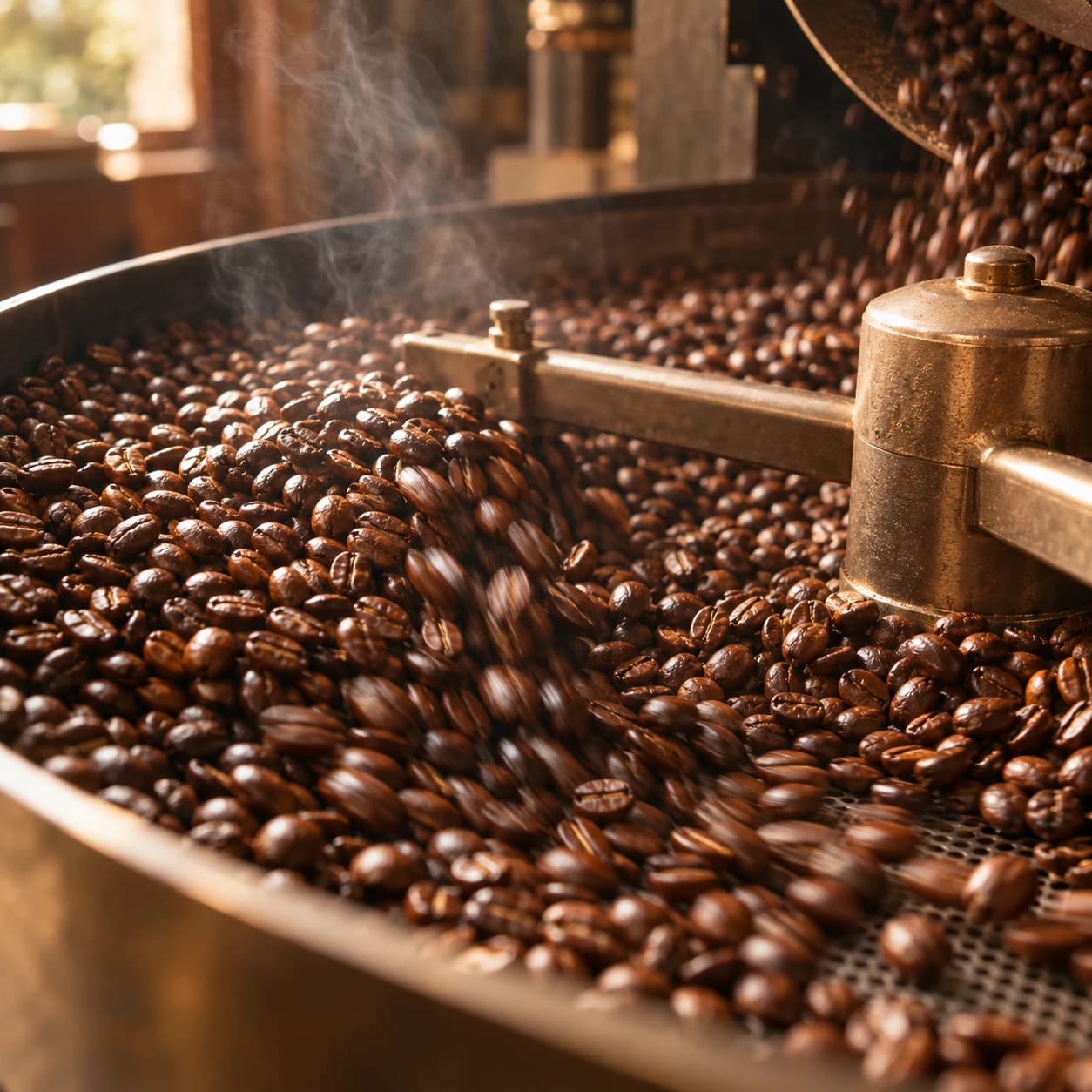
There is a probe and a laptop on the bench, but Nadia roasts by ear and by smell first: the snap of first crack, the moment the grassy smell turns to fresh bread and then to caramel. Every batch is tasted the next morning before a single bag leaves.
“
You can read a roast curve on a screen, but the coffee tells you first. It crackles, it smells of bread, then of caramel. You learn to listen for it.
Nadia Ferrer, on roasting by ear
Year the drum was built
1958
Behind other people's bars first
11 yrs
Batches roasted every week
32
(02)From farm to cup
Three stopson one line.
Every bag passes through the same three pairs of hands. This is what happens at each stop, and why it takes about three months.
010203Chapter · of 03FarmRoastCup
010203
01Farm
Picked ripe, sorted twice.
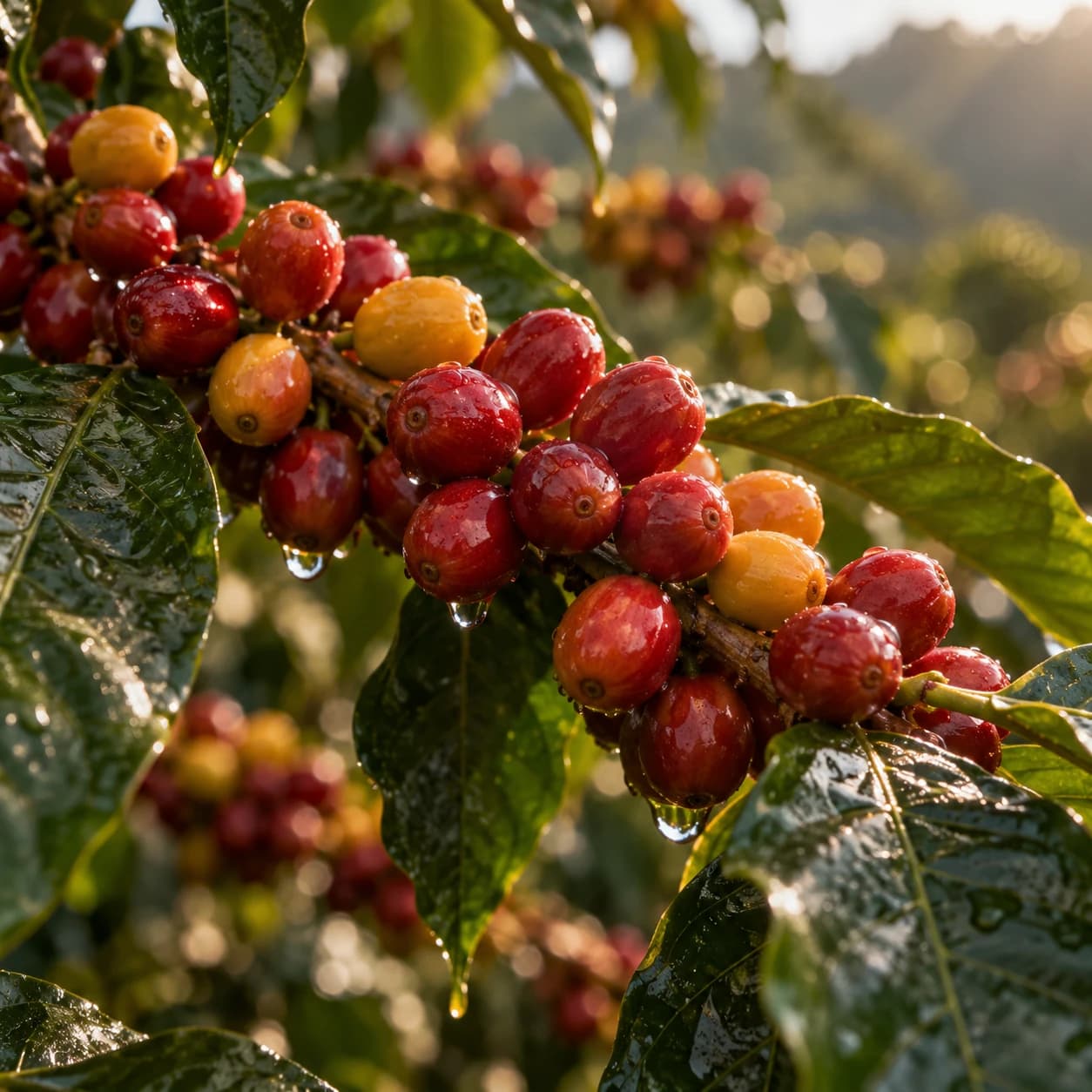
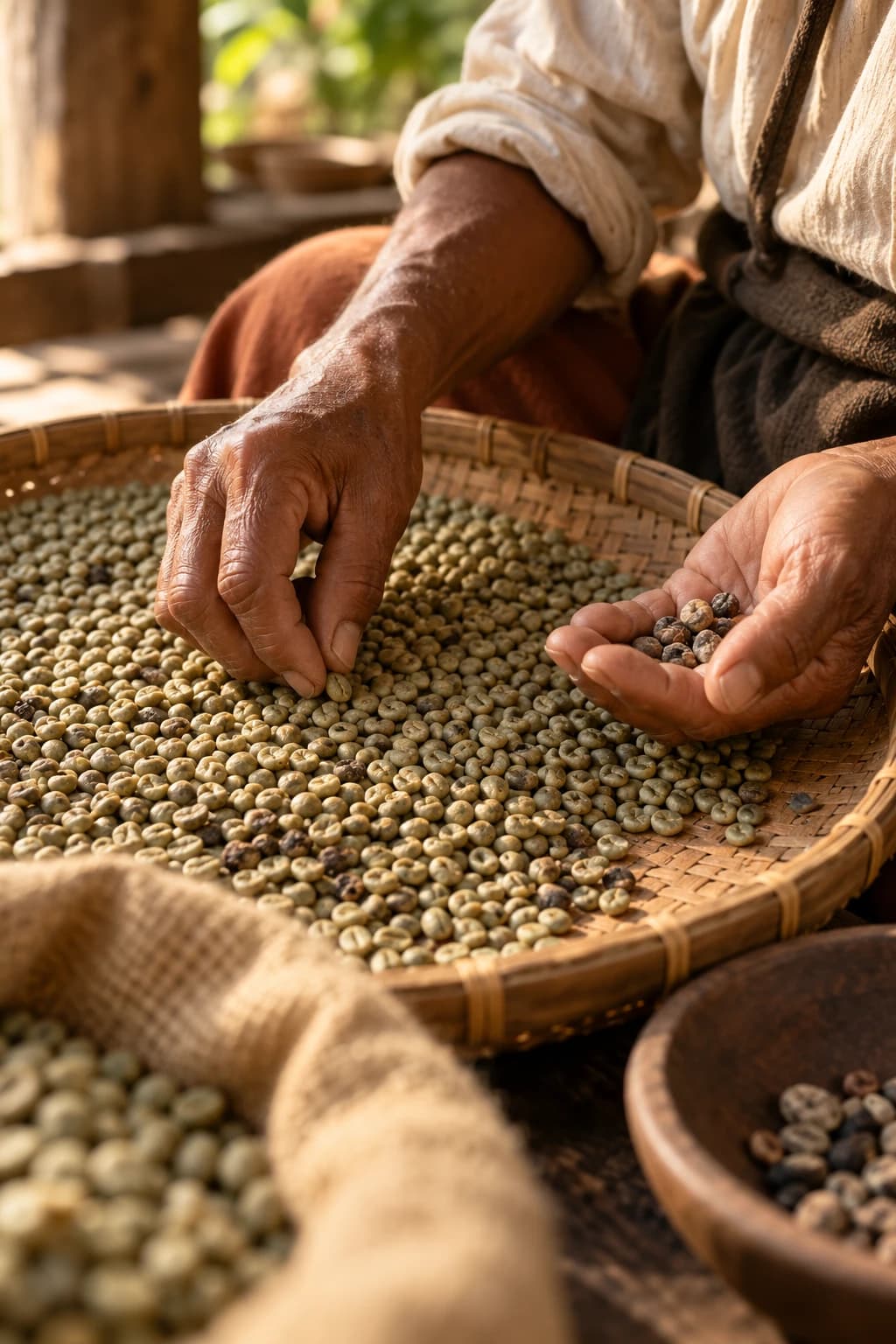
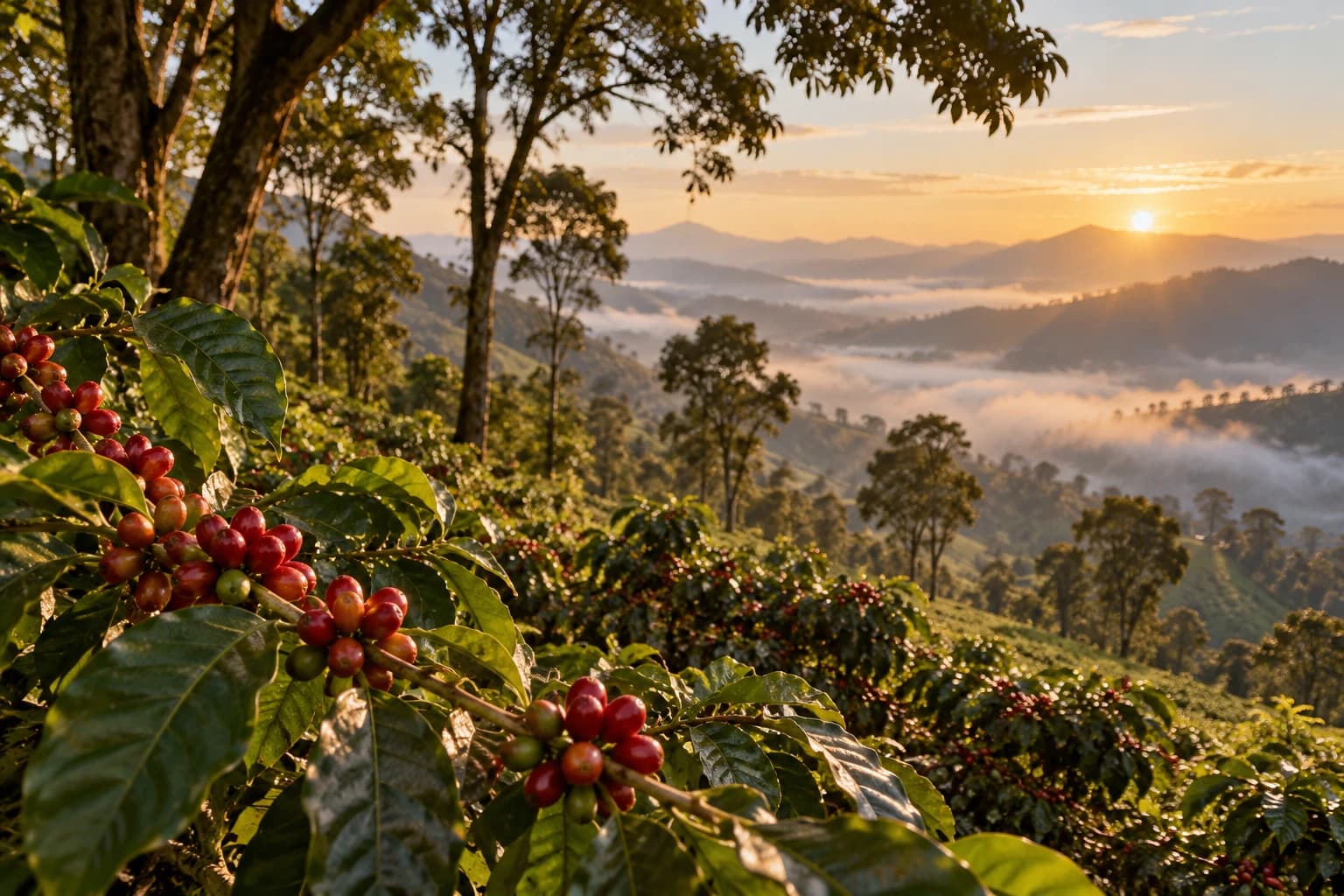
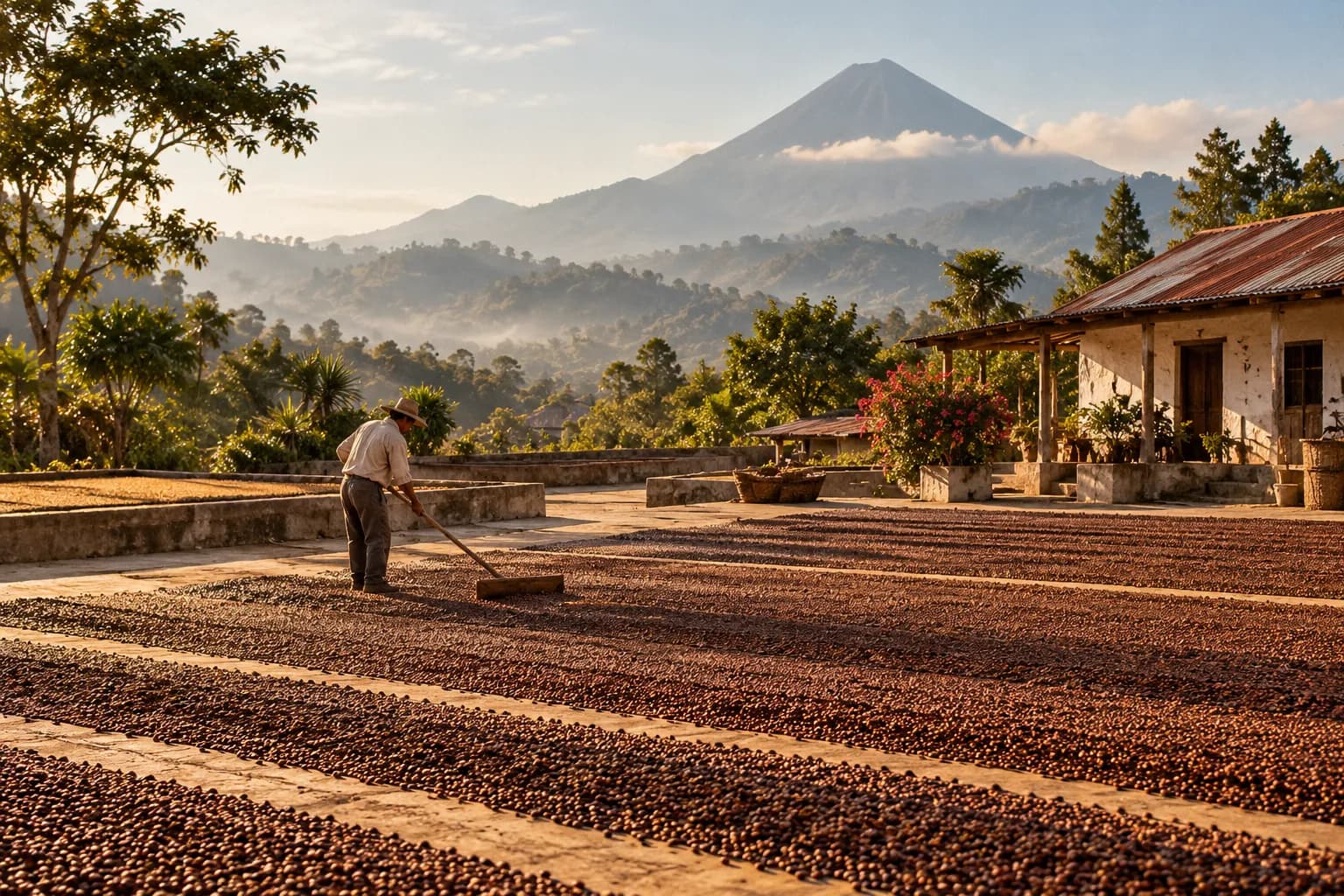
Coffee is a fruit, and it only tastes as good as the day it was picked. Our partners go over each tree four or five times a season and take only the red cherries. After drying, the green coffee is sorted again by hand on woven trays before it leaves the farm.
Picking passes per tree, every harvest
4–5
Defects allowed in a 350 g sample
< 5
From the drying patio to Alder Bend
3 mo
02Roast
Fifteen kilos, by ear.
Green coffee rests in the warehouse for a week to settle. On Tuesdays and Fridays it goes into the drum fifteen kilos at a time, about twelve minutes a batch. We log every curve, but the call to drop the beans into the cooling tray is made by sound and smell.
In the drum per batch
15 kg
Average roast, light to medium-dark
12 min
Green coffee rests before it's roasted
7 days
03Cup
Tasted before it's bagged.
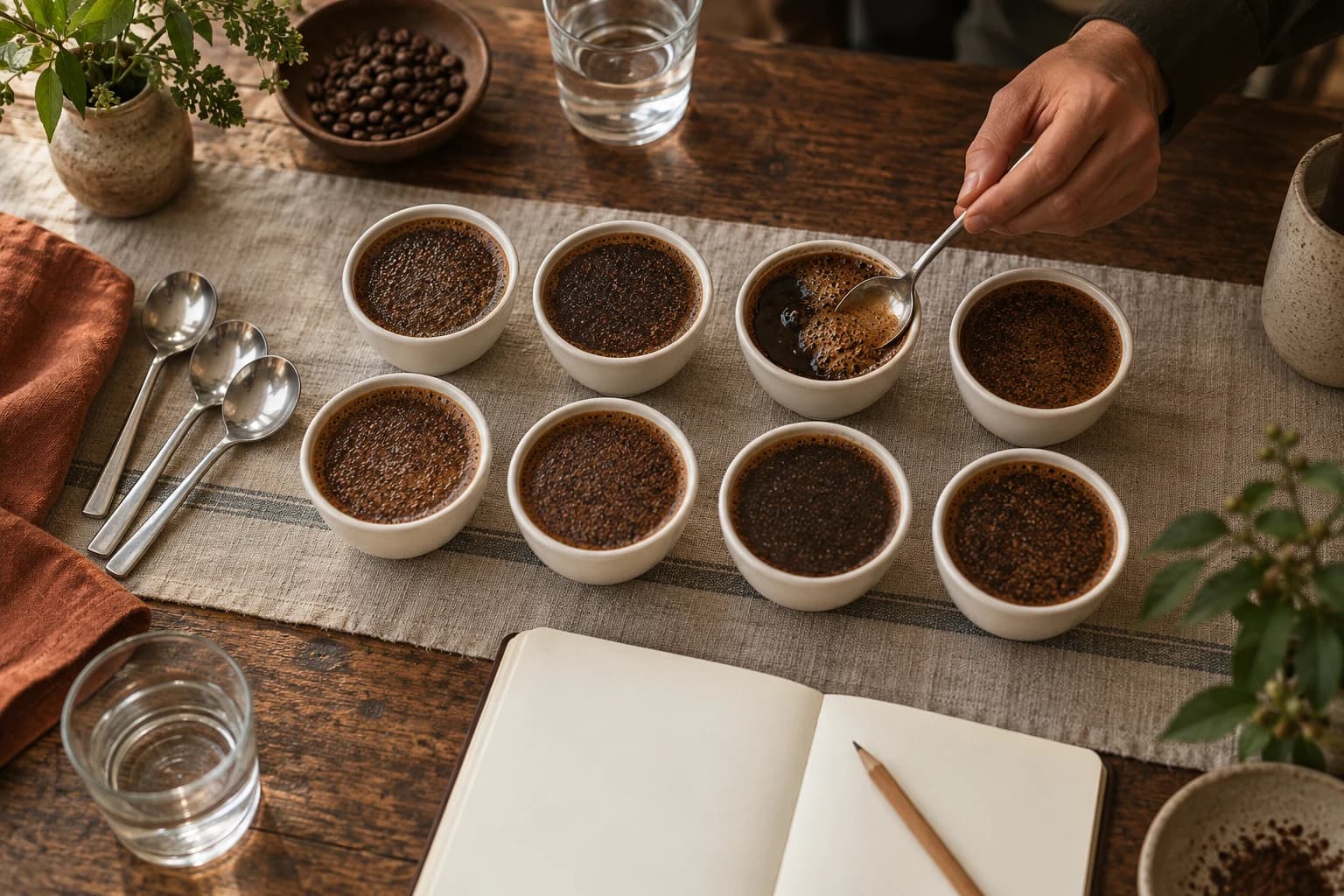
A sample from every batch is cupped the morning after it's roasted: eight bowls on the oak table, tasted blind against last week's. If a batch doesn't taste like its farm, it doesn't go out. If it does, it's bagged that morning and at your door two days after it left the drum.
Bowls on the table at every cupping
8
Rest before a batch is tasted
24 h
From the drum to your door
2 days
(03)The farms
Twelve farms,five regions.
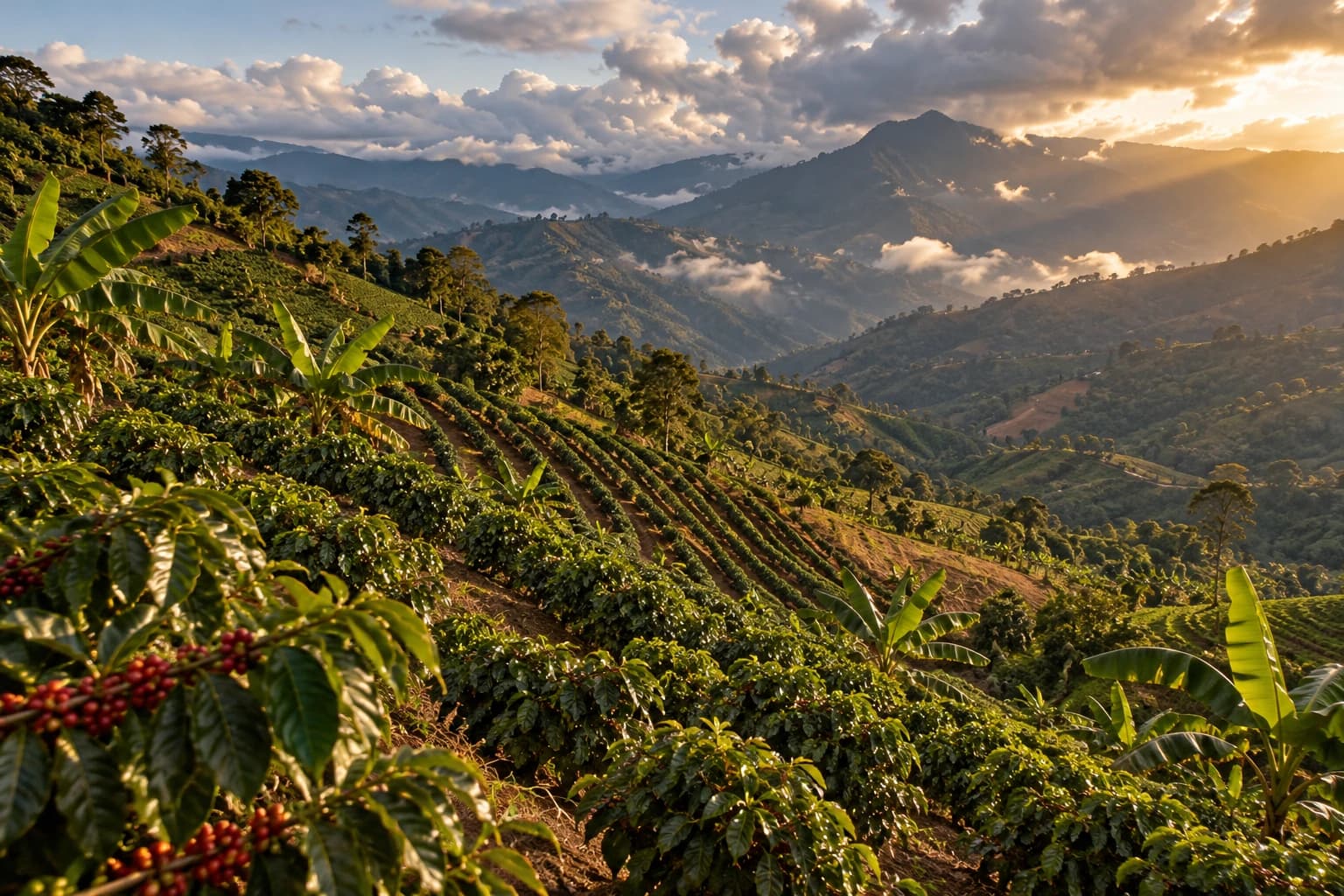
We buy from the same producers every year, by name. These are the five regions they farm in and the months their harvest comes in.
Guji
Ethiopia · 5.9°N 38.9°E
Harvest
Nov to Jan
In the bag
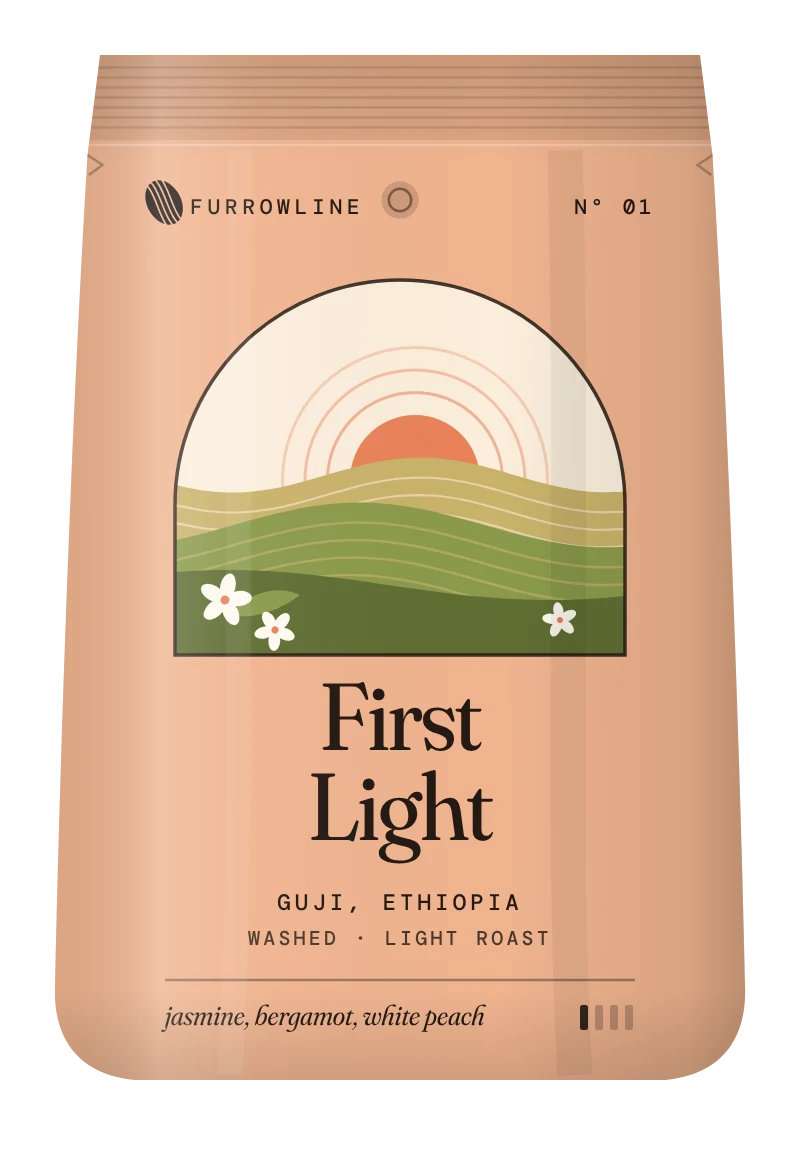
First Light
640 smallholder families deliver cherry to one washing station.
No broker sets the price or picks the lot. We buy from twelve producers we know, and the farm is printed on every bag.
02
Every harvest, in person
Someone from Alder Bend stands on every partner farm every harvest, cups on the patio and agrees next year's lots there.
03
Well above market
Prices are agreed before the harvest, an average of 70% over the market rate last season, and held for the year even if the market falls.
(04)What we won't do
Four thingswe won't do.
Most of what makes a coffee good happens before it reaches us. These are the shortcuts we ruled out on day one.
01
Roast dark to hide a defect.
Roast level is chosen on the cupping table for each coffee. If a lot only tastes good roasted dark, we don't buy it.
02
Blend lots we can't name.
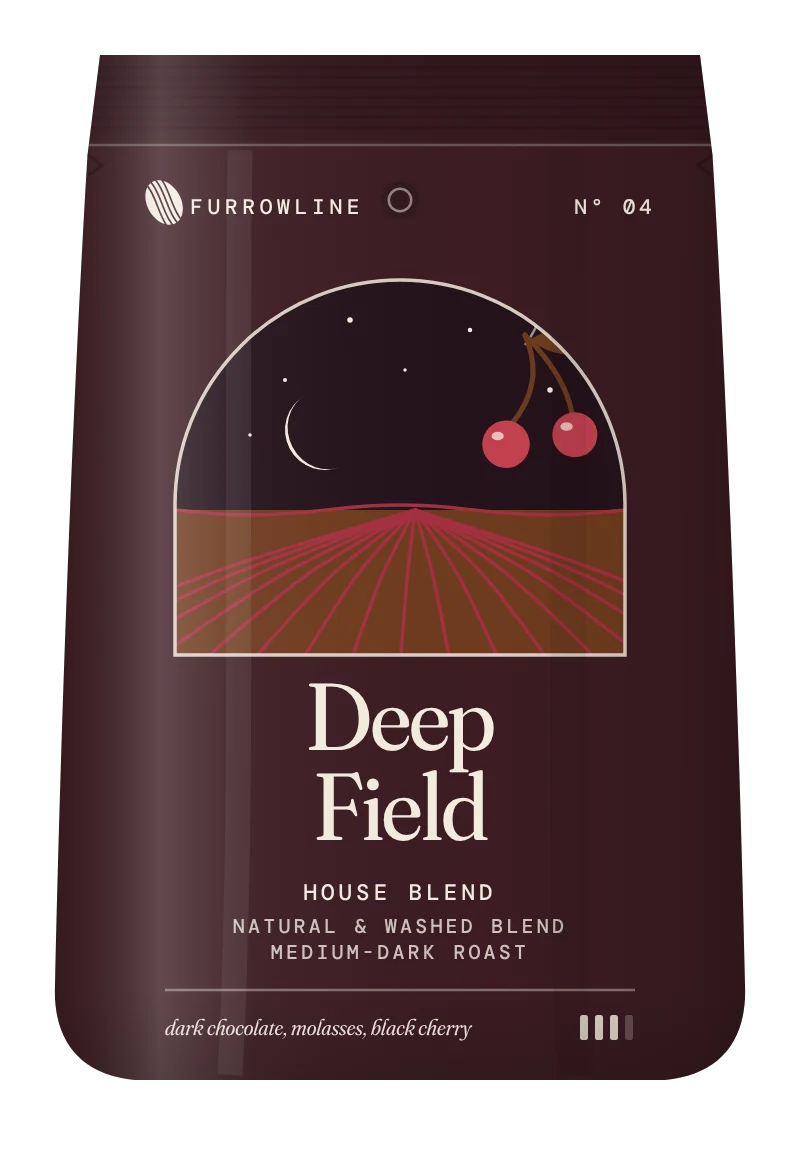
Deep Field is three named farms in fixed shares, printed on the bag. Nothing comes from a broker's mixed container.
03
Sell coffee older than four weeks off roast.
Every bag carries its roast date. Whatever is left on the shelf at 28 days goes into the café's cold brew, never the post.
04
Buy from a farm we haven't stood on.
If we can't get there for the harvest, we skip that year's lot and wait for the next one.
(05)Ten years on Mill Race Road
Ten years,one drum.
From forty kilos sold out of the loading door to twelve partner farms. The roaster is the one thing that hasn't changed.
2016The drum arrives
Nadia buys the 15 kg drum and leases the empty seed warehouse on Mill Race Road. The first roasts sell out of the loading door.
2017The first direct lot
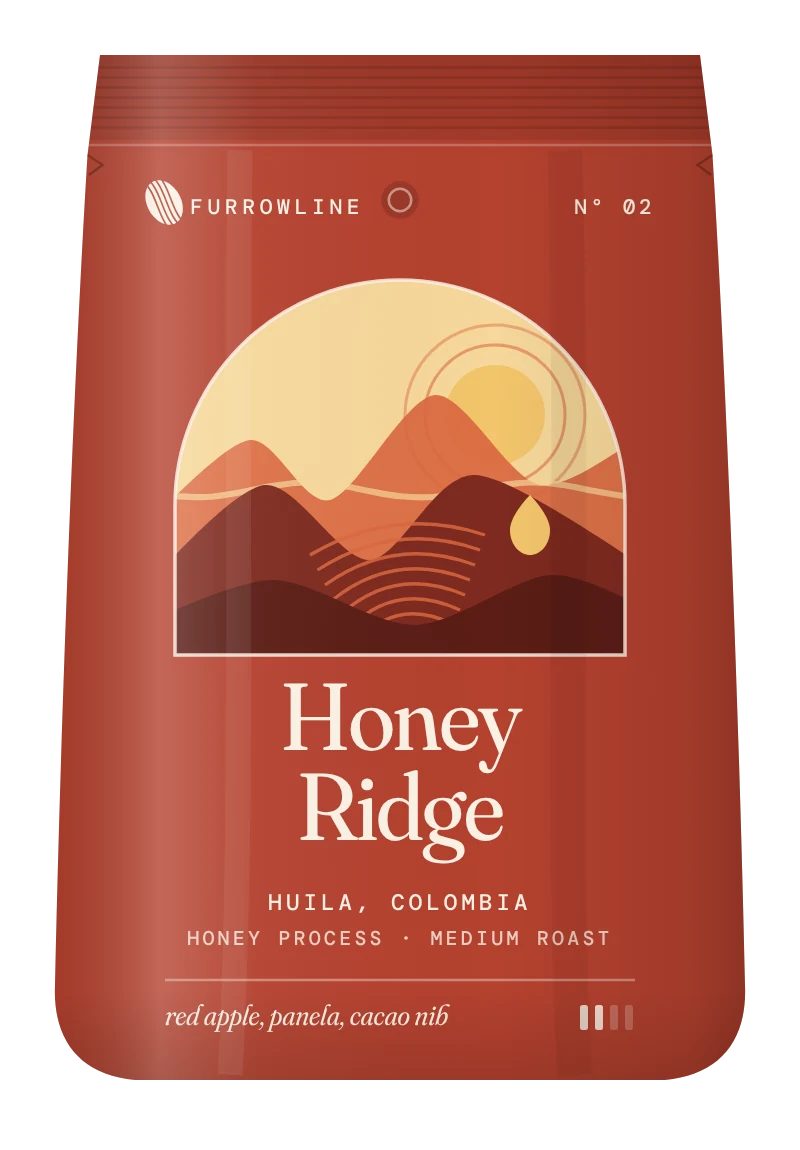
The Quintero family's honey coffee from Huila arrives. They have sold us every harvest since, and it became Honey Ridge.
2018First trip to Guji
Two weeks at a washing station in Hambela. We have gone back every January since, and First Light was the result.
2019The café opens
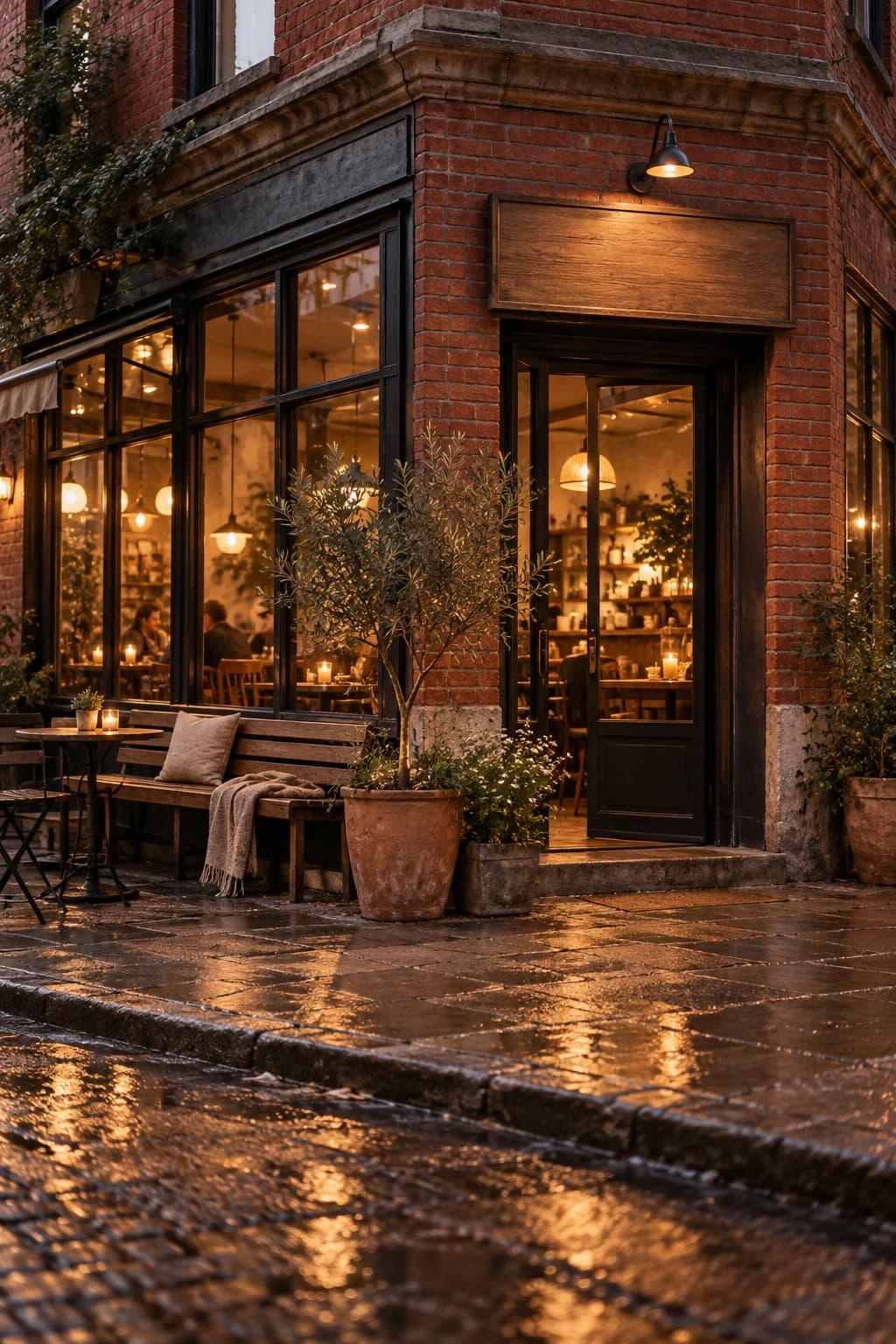
The warehouse's front room gets a long oak bar, so you can drink the coffee a few steps from the drum it came out of.
2023Harvest Lantern
Our first seasonal release: sixty bags from one factory in Nyeri. It sold out in nine weeks, and comes back each autumn.
2026The twelfth farm
The Othaya factory behind Harvest Lantern becomes a full partner, with its lots agreed a year ahead. Twelve farms now, every one of them visited each harvest.
Where to next
The signature four
Taste the line for yourself.
Four coffees from four of our farms, roasted on Tuesday or Friday and at your door two days later.